February Friday History: Kraus-Anderson at Split Rock Lighthouse
By Matt Goff, KA Archivist
As KA completes more work on this historic landmark, we look back at its history
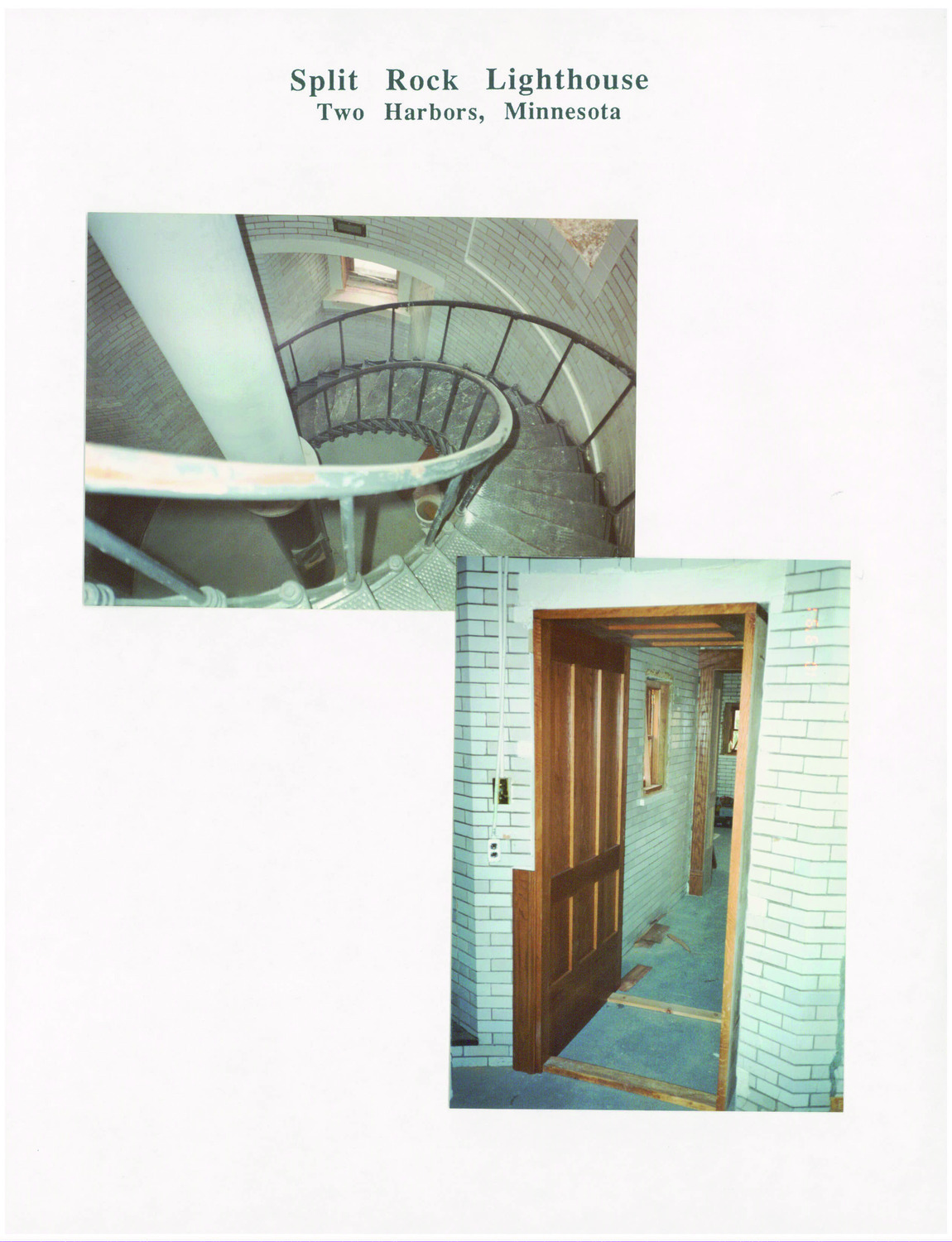
In 1991 Kraus-Anderson was trusted to perform restoration work on Split Rock Lighthouse, one of Minnesota’s most cherished historic landmarks.\
Split Rock’s origin story usually references the storm season of November 1905, which destroyed dozens of ships and cost the lives of even more seaman. One storm in particular was named “Mataafa” after one of the many ships that were lost on November 27th and 28th.
Although it is true that the deadly storm season of that year likely encouraged the US congress to finally act, it is also true that the Minnesota legislature had been petitioning congress to build a lighthouse at approximately this location since 1857 when Minnesota was still a territory. An important factor in the historical origins of Split Rock Lighthouse is the massive amount of iron ore that began to be shipped out of western Lake Superior at the turn of the 20th century. The National Register of Historic Places contains this fascinating tidbit: “The main reason the light was required on the west end of Lake Superior was that the cargoes of high-grade iron ore coupled with the iron ore deposits in the lake basin caused the compass needle to deflect greatly from true north.”
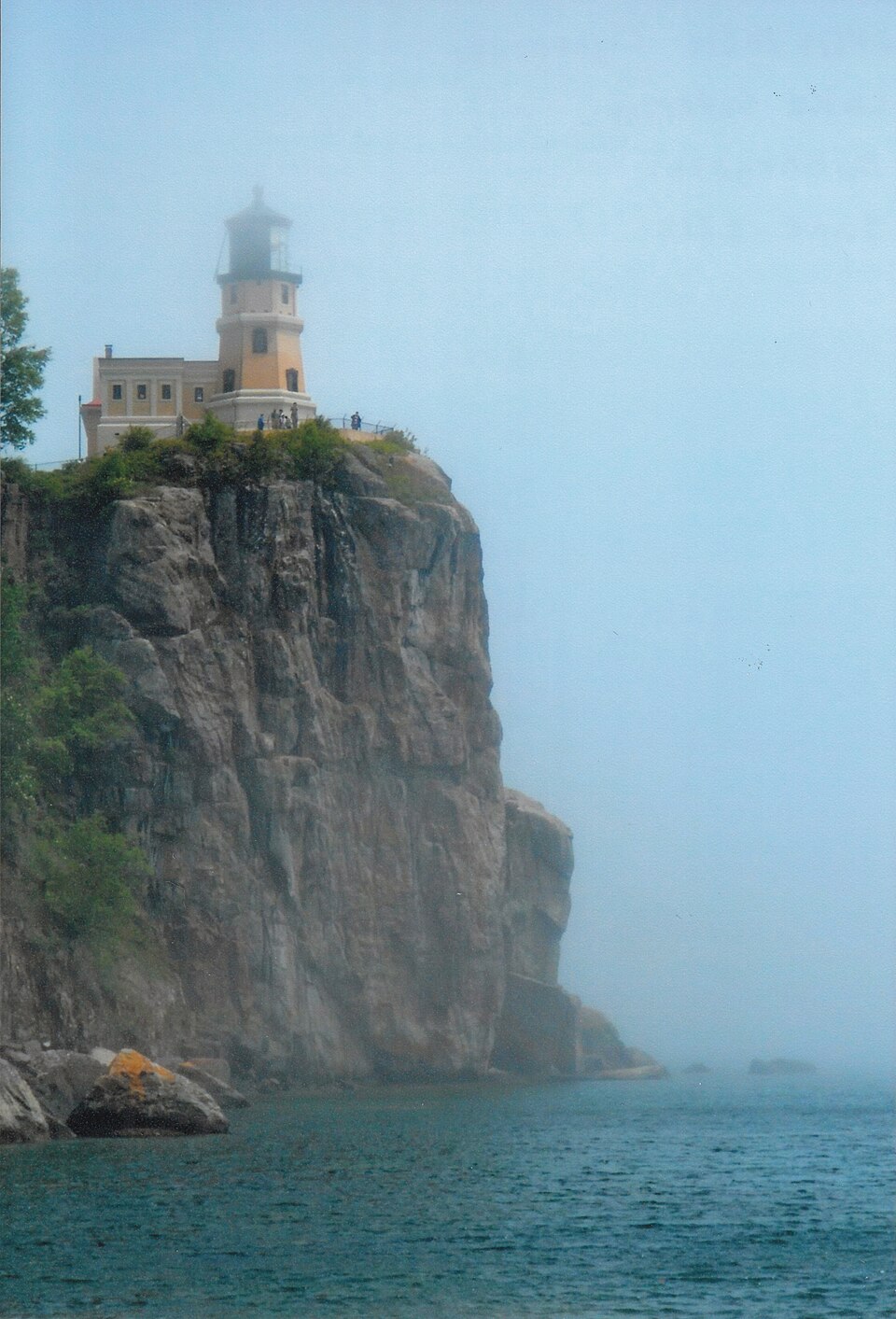
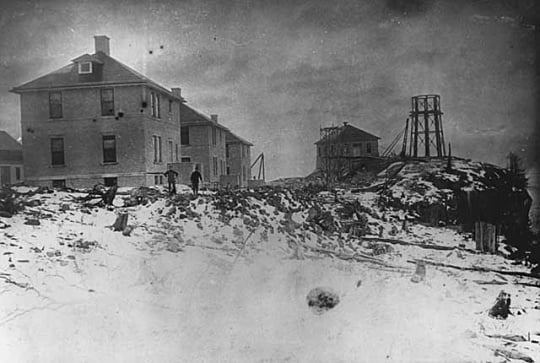
Although Kraus-Anderson doesn’t have the honor of being the original builder of Split Rock, as one of the construction challenges of its generation, it would have been an honor indeed. Since no road led to this point of rock in 1909, every beam, door, and hinge had to be winched up the side of this imposing cliff.
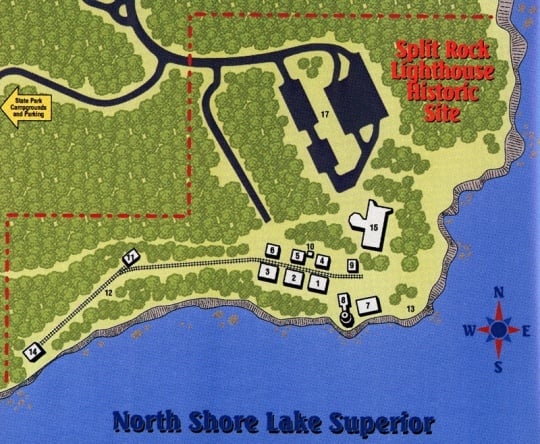
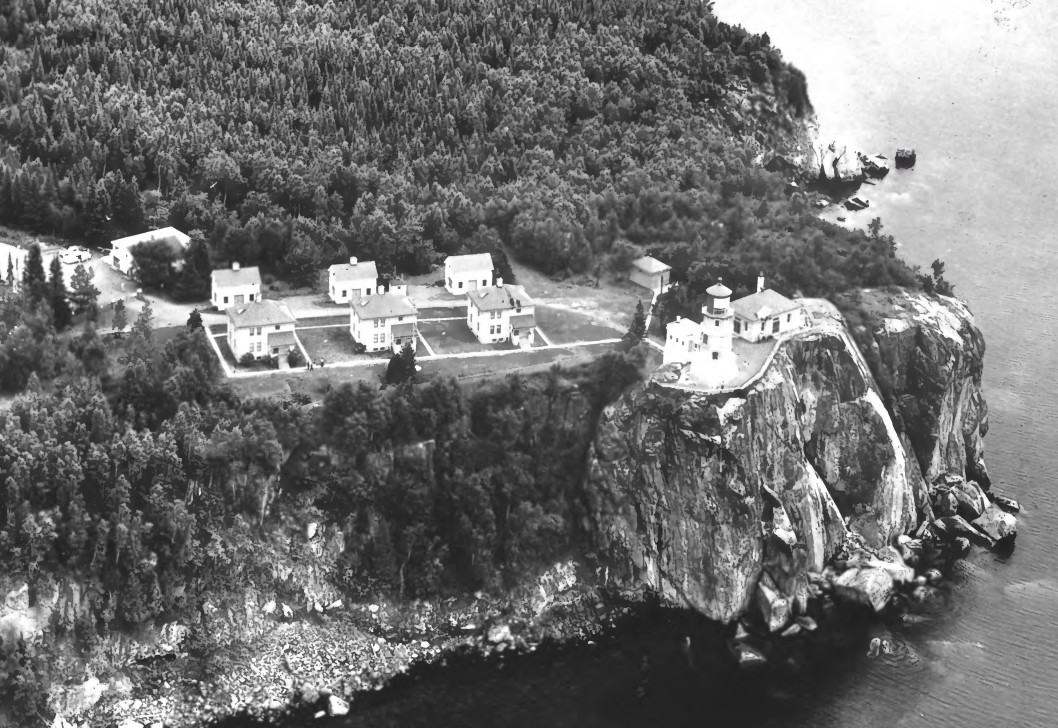
This isolation is one of the qualities that make Split Rock Lighthouse such a landmark, as the National Park’s statement of significance makes clear: “Split Rock Light Station possesses national significance as an extremely rare example of Great Lakes light stations designed as a single, cohesive and self-sufficient complex. Built between 1909-1910, the station served as a crucial aid to navigation for commercial freighters until 1969, at a time when the Great Lakes emerged as a vital component of the nation’s industrial economy.”
This isolation lasted about fifteen years, ending when the Lake Superior National Highway was carved along the North Shore in the mid-1920s. Once Split Rock was accessible by road, the romance of this craggy and once-isolated location made it a popular tourist attraction. By the 1930s, workers at the lighthouse sought guidance about how to deal with all the visitors, and it was thought necessary to install a fence for their safety.
When Split Rock was decommissioned as a lighthouse in 1969, it had already been serving as a working historic site for decades. In 1971 the State of Minnesota took ownership of the property and the area around the lighthouse became a state park, and in 1976 the Minnesota Historical Society began operating Split Rock as a historical site.
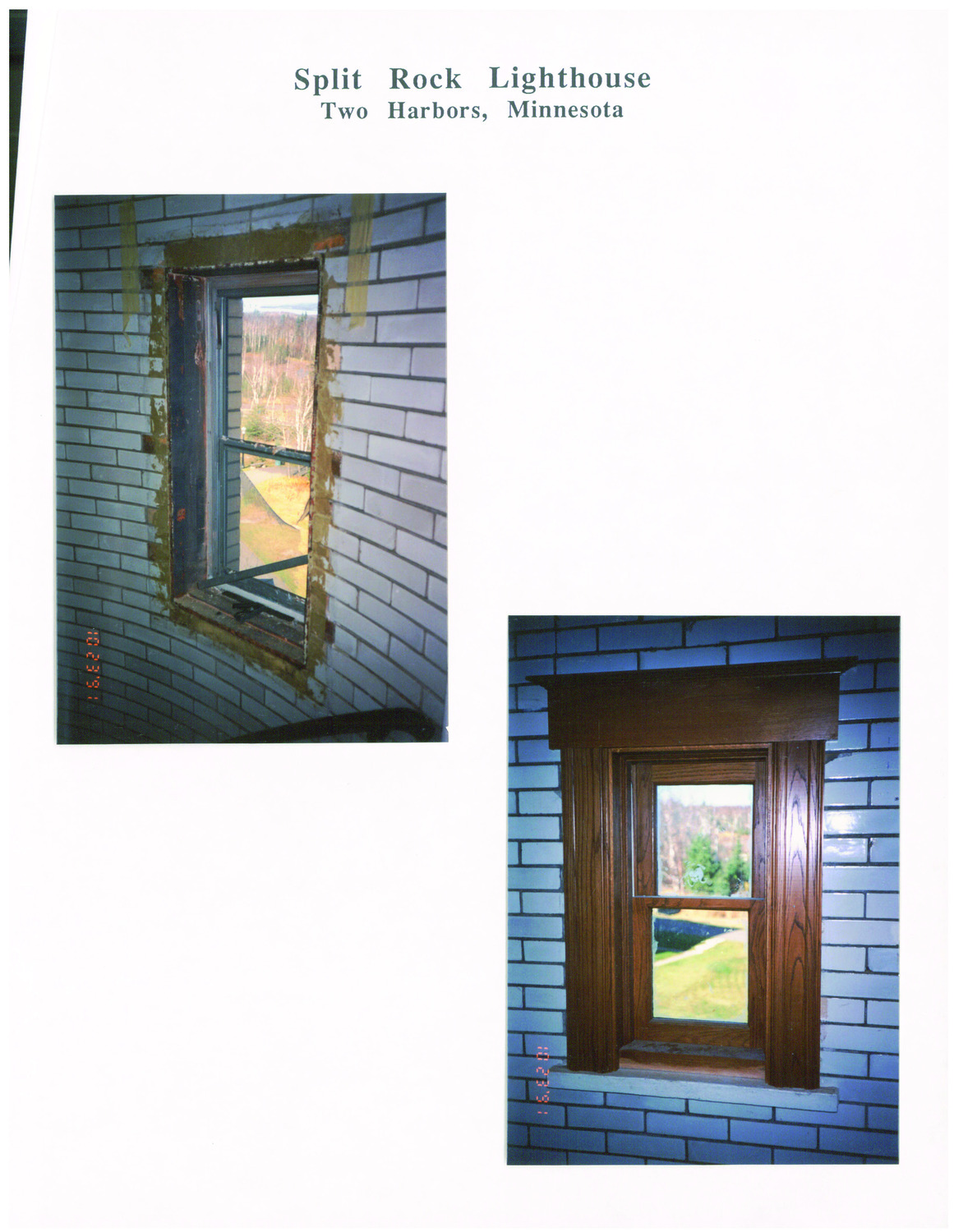
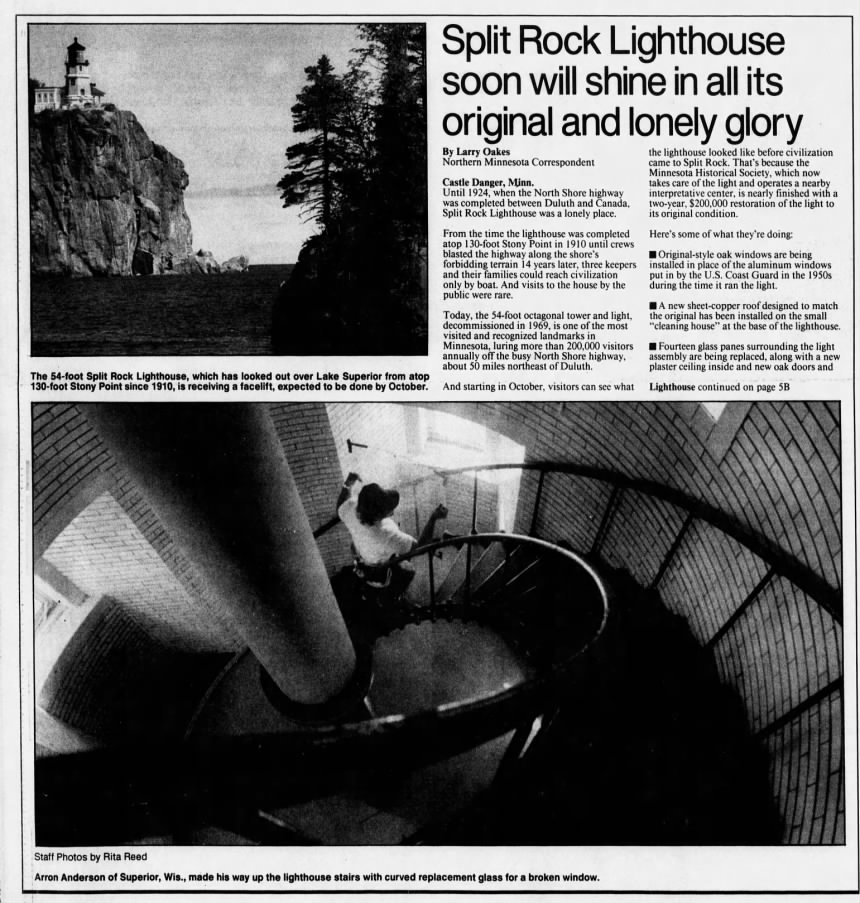
In 1991 the Minnesota Historical Society brought in Kraus-Anderson to perform some renovation work, including window restoration, replacing the mid-century metallic frames with oak that matches the look of original windows.
In 2011 Split Rock Lighthouse was designated a National Historic Landmark. As one of the most visited historic sites in Minnesota, and one of the most photographed lighthouses in the world, it might seem natural for Split Rock to be included in this list, but it is a rare and significant designation, and Kraus-Anderson is honored to have been trusted with its renovation.
CATEGORY: Awards