May Friday History: Short, Sweet Origins of the U of M Bee Lab
By Matt Goff, KA Archivist
To celebrate the Spring season and the little critters that make the blooming season fruitful, we’re looking at a recent addition to Kraus-Anderson’s history.
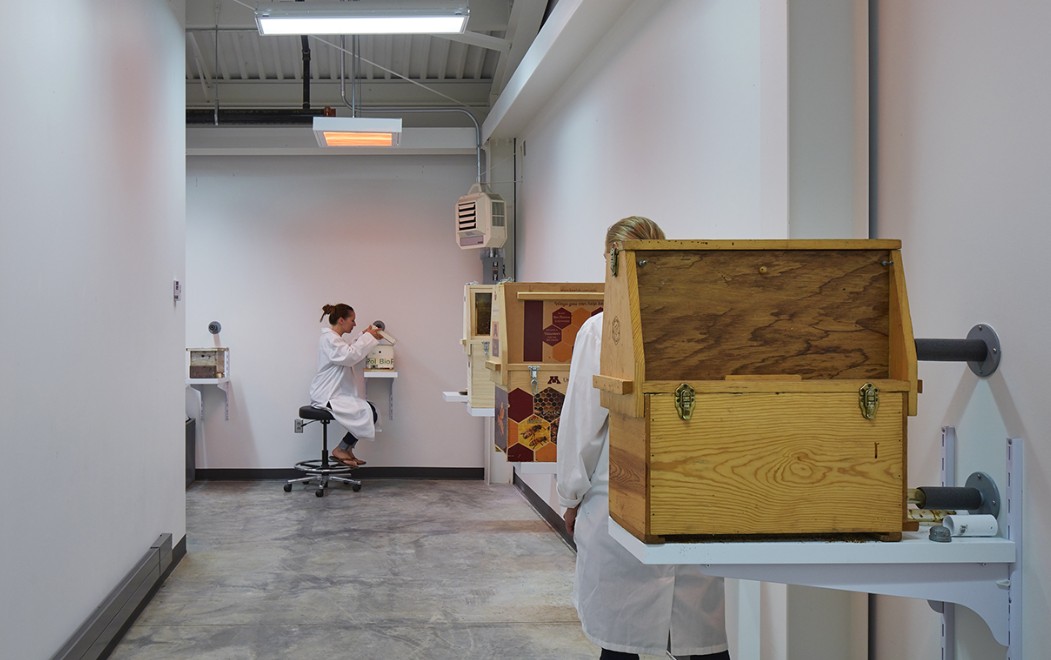
In 2016, Kraus-Anderson built the Bee and Pollinator Lab for the University of Minnesota. Coming in at around six million dollars, the Bee lab is a fairly small project by the standards of U of M research facilities, but it punches above its weight as far as global impact. The same can be said of the humble creatures it seeks to understand and help.
There is far more to bees than the honey they provide:the FDA estimates that bees provide up to twenty times more economic benefit as pollinators than they do as providers of honey and comb. In fact, without their help as pollinators, the global food supply would take a major hit. One estimate has it that about half of what we see in North American super markets would disappear without the humble bee.
Ensconced in the agricultural testing fields of the U of M’s St. Paul campus, the Bee Lab is just a couple blocks southeast of the Bell Museum.
An earlier rendering of the lab offers a glimpse at the evolution of the building’s design.
As the final design took on more vertical elements, the designers added a thoughtful touch for the larger flying critters out there: The glazing is etched to alert birds of the collision danger.
KA doesn’t build for the glory of it, but it is worth pointing out that this project nabbed the Minnesota Construction Association’s Merit Award for projects under fifteen million.




CATEGORY: Awards